Trying to choose between an oceanfront home and a soundside home in Duck? It is one of the most important decisions you can make as a buyer here, and it is about much more than just the view. Your ideal fit depends on how you plan to use the property, how you think about maintenance and carrying costs, and what kind of daily experience you want in the Outer Banks. If you are weighing lifestyle and investment goals at the same time, this guide will help you sort through the tradeoffs and move forward with clarity. Let’s dive in.
Oceanfront vs. Soundside in Duck
In Duck, the choice is not always as simple as east side versus west side. Some communities include homes that range from oceanfront to soundfront, which can give you more flexibility in how you balance access, views, and amenities.
That matters because in Duck, access rules are unique. According to the Town of Duck beach information, the town does not own or maintain public beach accesses, and there is no public parking at beach access points. Beach access is generally provided through private community easements for residents, renters, and guests.
On the sound side, the town does offer public access points, but there is no public soundside beach and no public launch point for motorized personal watercraft, according to the same Town of Duck guidance. That means your specific property or community setup matters a great deal, whether you are buying for personal use, rental use, or both.
Why Buyers Choose Oceanfront
Oceanfront homes are the most direct path to a classic beach lifestyle. If you picture easy beach days, sunrise views, and a simple connection to the Atlantic, oceanfront is often the strongest match.
Current oceanfront rental examples in Duck emphasize exactly those features: beachfront setting, private beach access, wide water views, and larger amenity packages for groups. A current oceanfront rental example in Duck highlights how strongly direct beach access and large-scale gathering space can shape appeal.
Oceanfront lifestyle benefits
If you are considering oceanfront, some of the biggest advantages include:
- Direct access to the beach experience
- Sunrise views and open Atlantic scenery
- Strong appeal for buyers who want a true beachfront second home
- Premium positioning for many vacation-rental guests
Oceanfront can also simplify how you use the home. You are not planning your day around parking, private access logistics, or a walk from another part of town. For many buyers, that convenience alone is worth paying for.
Oceanfront cost considerations
Oceanfront usually sits at the top of Duck’s pricing spectrum, although size, age, condition, and updates still create overlap across property types. Public listing snapshots in the research show oceanfront examples ranging from about $407 to $1,046 per square foot, which is a wide band but still a useful reminder that “oceanfront” does not tell the whole story.
Carrying costs can also be higher. The Town of Duck tax rates page shows a townwide property tax rate of 0.1800, a Beach Nourishment MSD-A rate of 0.0798 in the project area, and a higher MSD-B rate of 0.1890 that applies only to certain oceanfront properties.
Oceanfront maintenance exposure
Oceanfront ownership comes with a different risk profile than soundside ownership. The town’s infrastructure vulnerability assessment identifies coastal erosion as the primary oceanfront issue.
That does not mean oceanfront is the wrong choice. It means you should evaluate dunes, shoreline conditions, nourishment history, and ongoing maintenance planning with clear eyes. The town has continued beach nourishment, and it notes that the 2023 project placed nearly 1.7 miles of beach nourishment with about 550,000 cubic yards of sand, according to the town tax and project information.
Why Buyers Choose Soundside
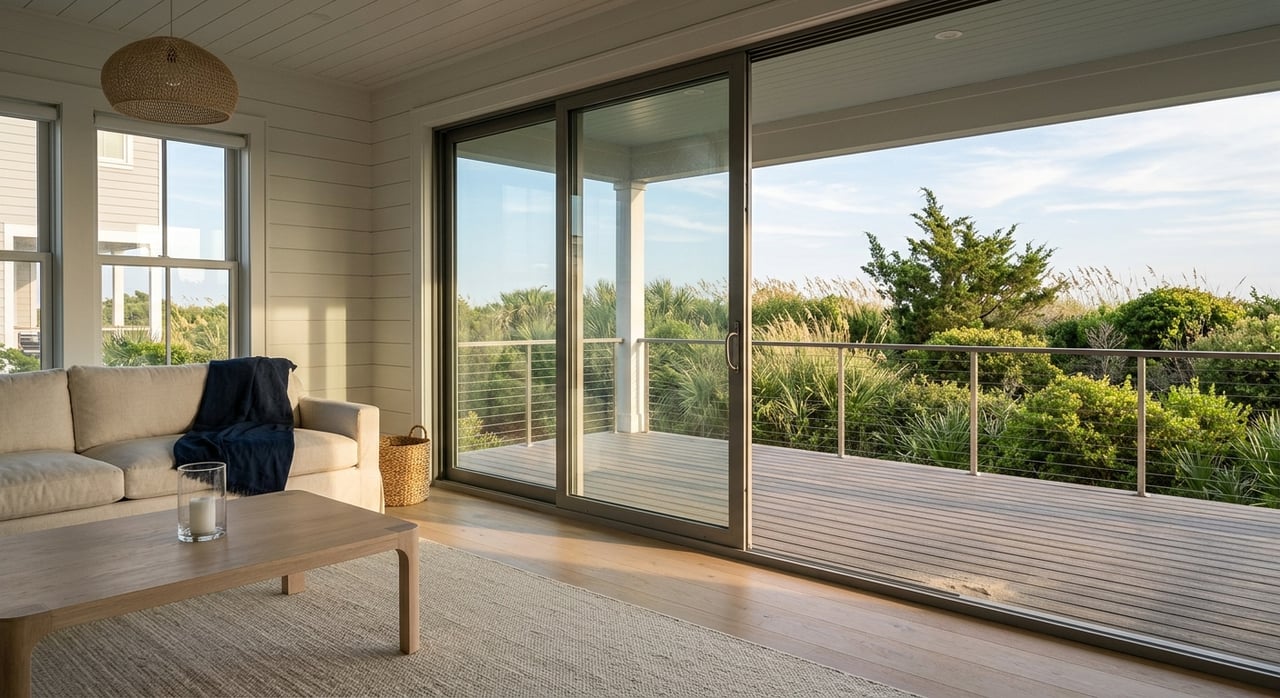
Soundside homes often appeal to buyers who want a calmer pace and a more village-centered routine. If sunsets, sound views, boardwalk access, and a quieter water setting are high on your list, soundside can be a very compelling option.
Duck’s soundside lifestyle is shaped in part by public amenities. The Duck Town Park and Boardwalk includes 11 acres of park space and a boardwalk that runs nearly a mile along Currituck Sound, with concerts and events centered around the park and amphitheater.
Soundside lifestyle benefits
For many buyers, soundside living offers:
- Sunset views over Currituck Sound
- Easier access to the boardwalk and town-centered activities
- A calmer water setting for kayaking and similar recreation
- A daily rhythm that may feel less centered on ocean beach traffic
Soundside can also mean different things in Duck. It may refer to direct soundfront, a westside home with sound views, or a home with sound access rather than direct frontage. That range is important, because two properties described as soundside may offer very different ownership experiences.
Soundside pricing and rental appeal
Soundside homes can offer more variety in price point, especially when you compare direct frontage with sound-view or sound-access homes. Current public listing examples in the research show westside homes around roughly $447 to $596 per square foot, which overlaps with some oceanfront examples once you factor in size and condition.
For rental buyers, soundside should not be dismissed as the lesser option. A current soundfront Duck rental example shows how sunset views, a dock, sound access, and strong amenities can still support premium weekly rates.
Soundside maintenance exposure
The risk profile on the sound side is different. Duck’s vulnerability assessment says the soundside is more exposed to flooding, marsh loss, and sea-level rise.
The town’s 2025-26 shoreline protection work near Town Park exists because of marsh erosion and storm-related flooding. So while soundside may feel calmer day to day, you still need to evaluate flood exposure, shoreline conditions, and long-term resilience carefully.
How Location Changes Daily Life
When you compare homes in Duck, think beyond the photo gallery. Your everyday experience may depend just as much on access and traffic patterns as on whether the home faces the ocean or the sound.
Duck Road, or NC 12, is the town’s only continuous north-south corridor, according to the Town Park and Boardwalk page. In peak season, that can shape how convenient a property feels, especially if you want to walk to village amenities or move easily between the beach, the boardwalk, and town events.
A community can also soften the tradeoff. For example, some neighborhoods include both ocean and sound orientation along with shared amenities. The Four Seasons community is described as ranging from oceanfront to soundfront and includes beach accesses with parking, a trolley, and a soundside pier in its current community rental information.
What the Market Data Suggests
Duck’s public market data tells an important story: this is not a one-price market. The Realtor.com Duck market page shows 67 homes for sale, a median list price of $495,000, a median 107 days on market, and labels Duck a buyer’s market.
At the same time, the research report notes that the Outer Banks Association of Realtors’ February 2026 MLS report showed Duck’s year-to-date median sale price at $922,500. These figures measure different things, but together they suggest a broad range of entry points and a much higher waterfront tier.
For you, the takeaway is simple: compare homes by total ownership picture, not by category label alone. A well-updated westside home with useful access and strong views may compete closely with a dated waterfront home once you account for renovations, taxes, and maintenance.
Questions to Ask Before You Decide
Before you narrow your search, ask practical questions that go deeper than marketing language.
Confirm the true property type
Make sure you know whether the home is:
- True oceanfront
- True soundfront
- Westside with sound views
- A home with shared or deeded access rather than direct frontage
This is especially important in Duck, where the term soundside can cover several different setups.
Review access and community rules
Because Duck’s beach access is often private, ask exactly how access works. You should understand who controls it, whether there is parking, and what guests or renters need to know.
If you are considering a rental property, those details can shape the guest experience more than buyers expect.
Check flood and insurance implications
Flood risk should be part of your early review, not something you leave for later. The town’s floodplain information page can help identify Special Flood Hazard Areas and elevations, and it points buyers to FEMA’s official map resources.
You will want to understand flood zone, base flood elevation, and how those factors may affect insurance and long-term ownership costs.
Understand taxes and carrying costs
Ask whether the property falls in MSD-A or MSD-B and how that changes annual costs. This matters most on the oceanfront, where nourishment-related charges can be higher.
It is also smart to compare taxes, insurance, maintenance history, and likely capital needs as one full budget, not as separate line items.
Match the property to your goals
The best home for personal use is not always the best home for rental performance. Dare County levies a 6% occupancy tax on short-term rentals, according to the Town of Duck tax page, so investors should look closely at guest access, parking, HOA rules, pet policies, and how the home fits the rental market.
If your goal is a second home with occasional rentals, your ideal balance may look very different from a purely investment-focused purchase.
Which One Is Right for You?
If you want the closest possible relationship to the beach, direct Atlantic views, and top-tier beachfront appeal, oceanfront may be the better fit. If you want sunsets, boardwalk access, a calmer water setting, and a more village-oriented routine, soundside may be the better match.
In many cases, the smartest decision comes from looking past the label and focusing on how a specific property lives, what it costs to carry, and how it supports your long-term plans. In Duck, details like access, flood exposure, tax district, and community setup can matter just as much as the shoreline itself.
If you want help comparing oceanfront and soundside options in Duck, Sarah Collier offers clear, detail-driven guidance to help you evaluate lifestyle fit, ownership costs, and long-term value with confidence.
FAQs
What is the difference between oceanfront and soundside homes in Duck?
- Oceanfront homes sit on or directly along the Atlantic side, while soundside homes are on the Currituck Sound side or on the west side with sound views or sound access.
Are there public beach accesses in Duck for oceanfront areas?
- According to the Town of Duck, the town does not own or maintain public beach accesses, and there is no public parking at beach access points.
Do soundside homes in Duck have lower ownership risk than oceanfront homes?
- Not necessarily. Duck’s town study says oceanfront areas face more coastal erosion, while soundside areas are more exposed to flooding, marsh loss, and sea-level rise.
Are oceanfront homes in Duck always more expensive than soundside homes?
- Oceanfront homes generally occupy the highest price tier, but pricing can overlap depending on the home’s size, condition, lot type, updates, and community amenities.
What should rental-property buyers in Duck ask before choosing a home?
- You should ask about beach or sound access, parking, HOA rules, occupancy limits, pet rules, flood zone, tax district, and how the property’s setup may affect the guest experience.
How do Duck taxes differ for some oceanfront homes?
- Duck has a townwide tax rate plus beach nourishment districts, and certain oceanfront properties in MSD-B have a higher additional rate than properties in MSD-A.