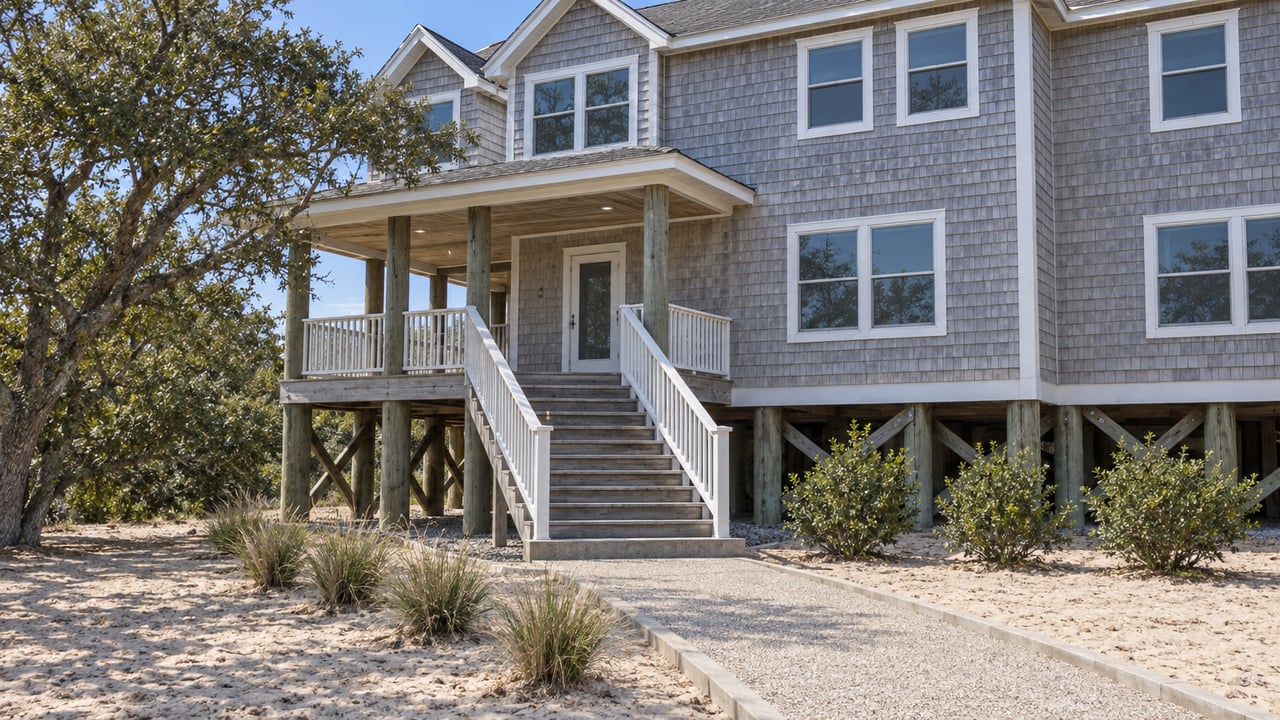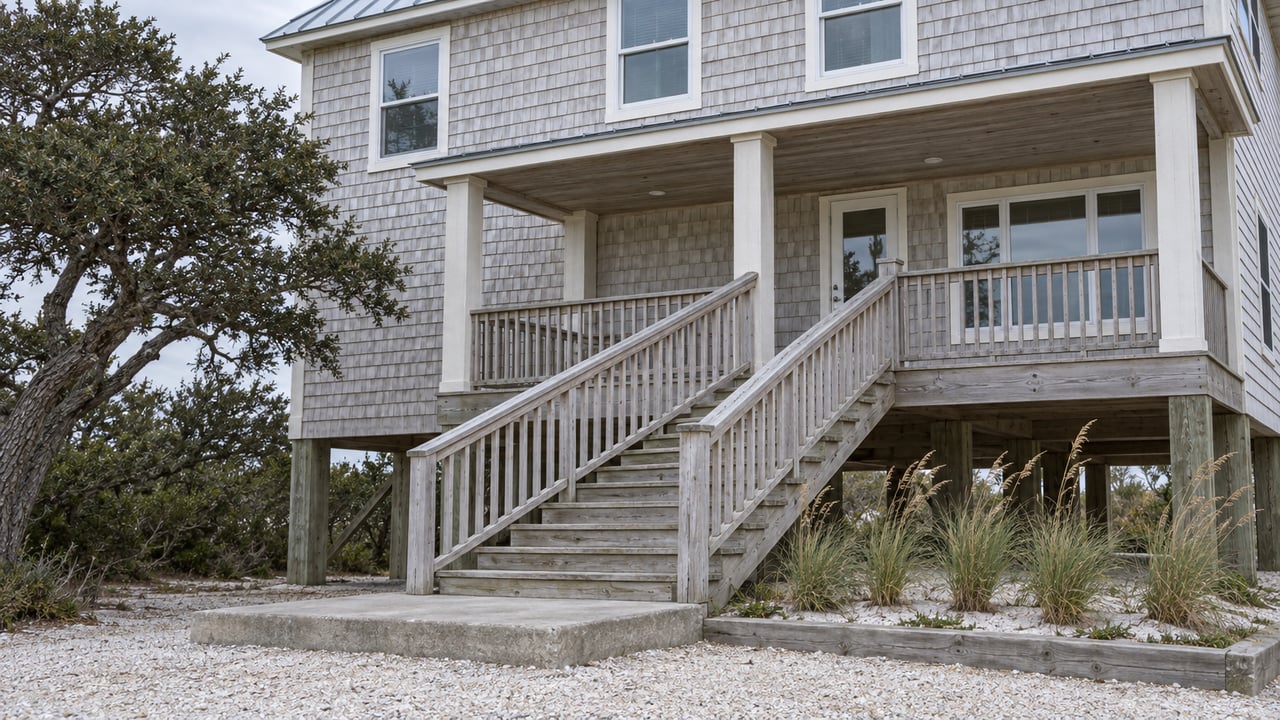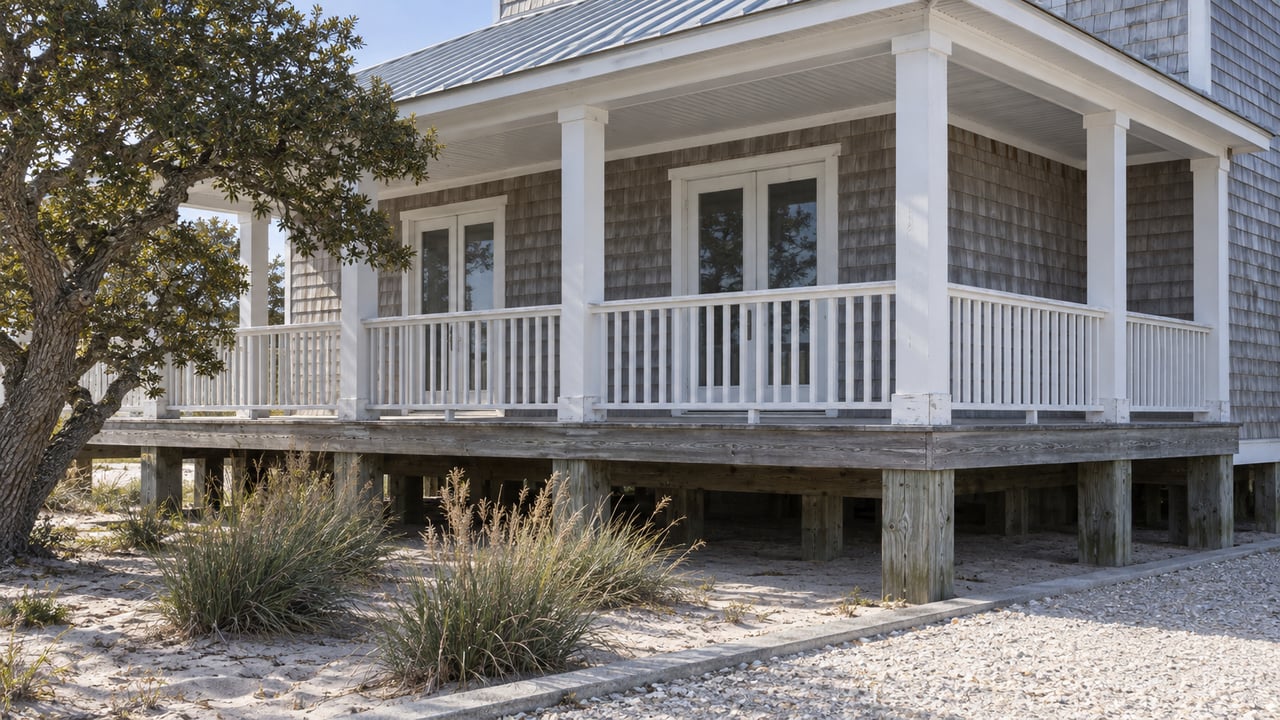
The sand is down. On July 19, 2026, the Town of Nags Head completed the fill phase of its latest beach nourishment project, widening the oceanfront from Bonnett Street south to the boundary of Cape Hatteras National Seashore. According to Outer Banks This Week, Weeks Marine ran two dredges through the work, staging equipment near Camelot Street in South Nags Head before wrapping the fill phase that Sunday in July.
For anyone with an oceanfront closing on the calendar this fall, that completion can feel like the hard part is over. It isn't. The mechanism that paid for the wider beach didn't disappear when the last dredge pulled out. It reset the tax lines, the recorded easements, and the disclosure paperwork that come attached to owning property near that stretch of coast, and several of those pieces are easy to miss because they don't show up on a home inspection.
One Beach, Layered Tax Charges
Nags Head funds beach nourishment through a combination of a townwide tax and a set of Municipal Service Districts, or MSDs, layered on top for parcels closest to the beach. The structure matters more than the sand does for anyone signing a purchase agreement this fall, because it determines who pays what, and some properties face multiple nourishment assessments.
Here's the part that surprises out-of-town buyers most: according to the Town of Nags Head, any property south of Bonnett Street that sits east of South Virginia Dare Trail or South Old Oregon Inlet Road falls inside two overlapping MSDs at once. The town created this stacked structure on purpose, to prepare for future nourishment cycles without waiting to reassign boundaries project by project. The practical effect is that a parcel in that zone shows two separate beach nourishment tax lines on its bill, not one.
The oldest districts, MSD 1 and MSD 2, have been in place since 2011 and historically carried a rate of 14.30 cents per $100 of valuation, based on the town's most recently published levy report, according to the Town of Nags Head. Four additional districts, MSD 3 through 6, were adopted in June 2021 at smaller rates, ranging from a half cent to one cent per $100, with MSD 5 initially left unrated. Individual district rates get set annually and can shift with each year's budget, so anyone under contract should confirm the current figure with the Nags Head tax office rather than rely on a prior year's number. The structural fact that won't change from year to year is the one that matters at the negotiating table: a parcel in the overlap zone carries two nourishment assessments, and a buyer comparing a listing there against a similar home one block outside the overlap should expect the tax bill, not just the view, to differ.
| District | Established | Historical nourishment rate (per $100 valuation) |
|---|---|---|
| MSD 1 & 2 | 2011 | 14.30 cents |
| MSD 3 | June 2021 | 0.5 cent |
| MSD 4 | June 2021 | 1.0 cent |
| MSD 6 | June 2021 | 0.5 cent |
| MSD 5 | June 2021 | Not set at adoption |
On top of the district charges, Outer Banks Voice reported that the townwide beach nourishment portion of the tax rate rose to 2 cents per $100 of valuation for fiscal year 2025-26, up from a revenue-neutral 1.58 cents, a change the town tied directly to preparing for this project. That fiscal year has since closed out, and every property in Nags Head pays into whatever the current townwide figure is. Only properties inside an MSD pay the district surcharge on top of it.
The Easement Nobody Reads Twice
The tax structure is the visible friction. The recorded easement is the one that surfaces later, usually when a title search turns up a document the buyer never asked about.
Nags Head requests a perpetual beach nourishment easement on oceanfront parcels along specific stretches of the coast, including addresses south of 8827 South Old Oregon Inlet Road and between 2919 and 5317 South Virginia Dare Trail. The easement only covers the seaward portion of the lot already subject to public trust rights, but every owner of record has to sign it in front of a notary before the town can place sand there.
That last detail is the one worth flagging to buyers. A new buyer closing on a home in one of these ranges should ask the closing attorney whether the current easement is already recorded or whether it still needs a signature. It's a small step, but it belongs on the closing checklist next to the deed and the survey, not in a drawer marked "someday."
What the Disclosure Form Actually Has to Say
North Carolina's residential property disclosure statute, G.S. 47E-4, requires sellers to disclose special assessments affecting the property. In Nags Head, that requirement now covers two categories that didn't exist as clearly a decade ago: MSD membership and any recorded nourishment easement.
Sellers who treat the standard disclosure form as a formality risk leaving both boxes unaddressed, which creates exactly the kind of late-stage surprise that stalls a closing. The fix is straightforward. Before listing, confirm which MSD or MSDs the parcel sits in and whether an easement is on file, then make sure both facts appear on the disclosure rather than surfacing during the buyer's due diligence period.
Why the Timing Matters This Fall
The Town of Nags Head says property owners receive two separate tax bills every year, one from the town and one from Dare County, typically mailed between late July and early August. Payment is due by September 1, with interest starting at 2 percent for the first month after January 5 and three-quarters of a percent each month after that. The town assigns bills to whoever owned the property as of January 1, then mails a second bill to the new owner if a transfer happens later in the year.
That calendar has a direct consequence for anyone closing on Nags Head oceanfront property this fall. The town raised the townwide nourishment portion of its rate to 2 cents per $100 of valuation for fiscal year 2025-26, up from a revenue-neutral 1.58 cents, specifically to prepare for this project. That fiscal year has already closed out. The bill that matters for a closing happening now is the bill mailed this past summer and due September 1. Rather than carry over last year's 2-cent figure, confirm the current fiscal year's actual rate with the town or the closing attorney, and make sure the settlement statement prorates taxes against that number, not an older one pulled from a stale listing sheet.
Before You Write or Accept an Offer
A few checks take the guesswork out of a Nags Head oceanfront transaction this fall:
- Confirm which MSDs, if any, apply to the parcel using the town's district boundaries before making or accepting an offer.
- Ask whether a perpetual beach nourishment easement is already recorded, or whether it will need a notarized signature at closing.
- Request that the seller's disclosure specifically addresses special assessments under G.S. 47E-4, not just the general boilerplate.
- Match the closing date against the town's two-bill calendar so the tax proration reflects the current fiscal year's actual rate, not an assumption carried over from a prior year.
A Few Straight Answers
Does every Nags Head property pay a beach nourishment tax? Yes, through the townwide rate, which the town set at 2 cents per $100 of valuation for fiscal year 2025-26 to prepare for this project. Parcels inside one or more MSDs pay that base rate plus a district surcharge sized to their proximity to the beach, and the current fiscal year's exact townwide figure is worth confirming directly with the town.
Do I have to sign a new easement if I'm buying an existing home rather than building? The easement is tied to the address, not the current owner, so it may already be recorded. Confirm with the closing attorney rather than assume either way.
A finished beach nourishment project is good news for anyone who values a wider stretch of sand in front of the house. It just isn't the same thing as a simpler closing. The tax lines, the easement, and the disclosure obligations are permanent fixtures of owning along that stretch of coast, and they deserve the same early attention as the home inspection itself.
If you're weighing an oceanfront purchase or preparing to list in Nags Head this fall, Sarah Collier can walk through the specific MSD assignment, easement status, and disclosure requirements for your parcel before you write or accept an offer. Let's connect.
This article is general information, not legal, tax or financial advice. Consult a qualified professional about your situation.